Business StrategyExpat LifeFinance

Navigating the British Banking Maze: The Definitive Guide to UK Business Accounts for Expats
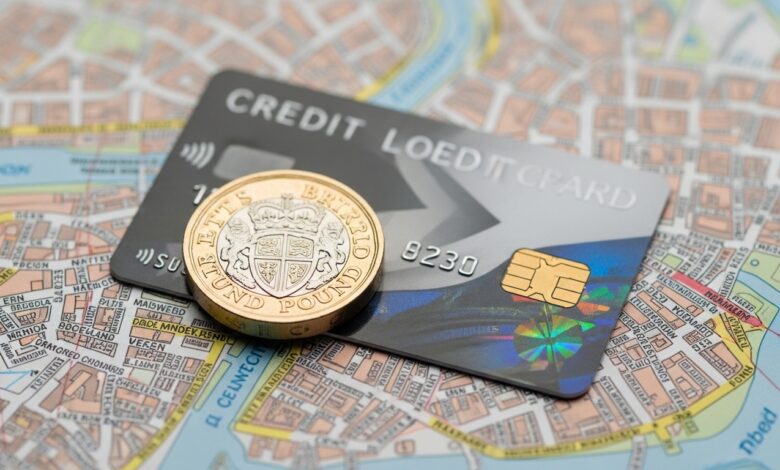
The Expat Entrepreneur’s Dilemma: Finding a Financial Home in the UK\n\nSetting up a business in the United Kingdom as an expat is an exhilarating venture, but it often comes with a significant hurdle: opening a business bank account. For many years, the traditional High Street banks were the only gatekeepers, often requiring a mountain of paperwork, a physical UK address, and a long-standing credit history that most newcomers simply do not have. This friction has historically discouraged talented entrepreneurs from planting their roots in the British market.\n\nHowever, the landscape has undergone a radical transformation. The rise of fintech and the evolution of ‘Challenger Banks’ have democratized access to the UK’s financial system. Today, being an expat is no longer a disqualifier for high-quality business banking. Whether you are a digital nomad operating a consultancy or a foreign investor launching a retail empire, there are now tailored solutions that respect your global background while providing the robust tools needed to thrive in the UK economy.\n\n[IMAGEPROMPT: A professional expat sitting in a bright, modern London cafe using a laptop, with a glimpse of the London skyline and a British pound symbol on the screen, photorealistic style.]\n\n## The Digital Revolution: Why Neobanks Rule for Expats\n\nFor an expat, the biggest barrier to traditional banking is the ‘Proof of Address’ requirement. Legacy banks often demand utility bills or council tax statements dating back several months, which is impossible if you have just stepped off a plane. Neobanks, or digital-only banks, have pivoted away from this rigid model. They utilize sophisticated e-KYC (Electronic Know Your Customer) processes that can verify identities through international passports and biometric data, making the onboarding process significantly faster.\n\nBeyond just ease of entry, these digital platforms offer integrated tools that traditional banks struggle to match. From real-time expense tracking to seamless integration with accounting software like Xero or FreeAgent, neobanks are designed for the modern, tech-savvy business owner. They understand that for an expat, time is the most valuable currency, and spending hours in a physical branch is simply not an option.\n\n### Revolut Business: The King of Cross-Border Transactions\n\nRevolut has become almost synonymous with international living, and their business offering is no different. For expats who deal with multiple currencies, Revolut Business is often the top choice. It allows users to hold, receive, and exchange over 25 currencies at the interbank exchange rate, which can save a business thousands of pounds in hidden FX fees over a single fiscal year.\n\nOne of the standout features for expats is the ability to issue corporate cards to team members worldwide. If you have a distributed team or frequently travel back to your home country for business, these cards can be managed with granular control from a single dashboard. The ‘Grow’ and ‘Scale’ tiers provide even more perks, including fee-free international transfers, making it a scalable solution as your UK venture expands.\n\n### Tide: The Speed and Simplicity Champion\n\nTide is widely regarded as one of the fastest ways to get a UK sort code and account number. Their value proposition is built on efficiency; many expats report opening an account in under ten minutes. Tide focuses heavily on small-to-medium enterprises (SMEs) and sole traders, offering a ‘free’ tier that is perfect for those just testing the waters of the UK market.\n\nWhile Tide is primarily a mobile-first experience, its desktop interface is clean and functional. They offer unique features such as ‘Invoice Protection’ and the ability to link existing accounts from other banks via Open Banking. For an expat who needs to move quickly to secure a contract or pay a deposit, Tide’s rapid deployment is a major advantage.\n\n### Airwallex: The Professional Choice for Scaling Global Entities\n\nIf your business is more complex than a simple consultancy—perhaps an e-commerce brand or a tech startup—Airwallex is a formidable contender. While not a ‘bank’ in the traditional sense (it is an Electronic Money Institution), it offers many of the same functionalities with a much stronger focus on global infrastructure. It allows expats to open ‘local’ accounts in the UK, US, EU, and Australia without needing a physical presence in those territories.\n\nAirwallex excels in its API integrations and its ability to handle high-volume transactions. For an expat founder who might still have significant operations in their home country, Airwallex acts as a bridge, allowing for the seamless movement of capital without the predatory fees often associated with international wire transfers. It is the bridge between a local UK presence and a global financial strategy.\n\n[IMAGEPROMPT: A close-up of a smartphone screen showing a modern banking app interface with multi-currency balances, placed on a marble table next to a cup of espresso and a stylized map of the United Kingdom.]\n\n## Essential Documentation: Preparing for the Application\n\nEven with the flexibility of modern fintech, the UK’s anti-money laundering (AML) laws are some of the strictest in the world. To ensure a smooth application process, expats should have their documentation ready before they even start the digital form. Most platforms will require a high-resolution scan of your passport and, in many cases, a ‘selfie’ video to verify your identity. If you are operating as a Limited Company, you will also need your Certificate of Incorporation and Memorandum of Association from Companies House.\n\nFurthermore, be prepared to explain the nature of your business. Banks are increasingly cautious about high-risk industries. Providing a clear link to your website, a brief business plan, or even existing contracts can significantly speed up the approval process. For those who are not yet residents, some banks may ask for a ‘Letter of Good Standing’ from your previous bank in your home country, though this is becoming less common in the digital banking space.\n\n## The Verdict: Which One Should You Choose?\n\nChoosing the best UK business bank account as an expat depends entirely on your specific needs and the stage of your business. If you are a freelancer or a solo founder looking for zero monthly fees and a quick setup, Tide is an unbeatable starting point. Its simplicity allows you to focus on your craft rather than administrative hurdles.\n\nOn the other hand, if your business is inherently international—meaning you pay suppliers in China, receive revenue in USD, and live in London—Revolut Business or Airwallex are the superior choices. The savings on currency exchange alone will likely pay for any monthly subscription fees. Ultimately, the ‘best’ bank is the one that removes the most friction from your daily operations, allowing you to navigate the exciting challenges of the UK market with confidence and financial clarity.